2026 - The year of the Ralph Loop Agent
We're barely a week into 2026, and tech Twitter is already ablaze with discussion of the "Ralph Wiggum Loop" — a technique that's challenging how we think about autonomous AI development. Named after the lovably persistent Simpsons character known for the "I'm in danger" meme, this approach is proving that sometimes naive persistence beats sophisticated complexity.
What Is the Ralph Wiggum Loop?
The Ralph Wiggum technique, originally coined by Geoffrey Huntley, is elegantly simple yet surprisingly powerful:
while :; do cat PROMPT.md | agent ; done
That's it. An infinite loop that repeatedly feeds the same prompt to an AI coding agent. But here's the clever part: progress doesn't persist in the LLM's context window — it lives in your files and git history. When the context fills up, you get a fresh agent with fresh context, picking up where the last one left off.
As Huntley puts it: "That's the beauty of Ralph - the technique is deterministically bad in an undeterministic world."
The Problem Ralph Solves
Traditional LLM conversations suffer from what Huntley calls "the malloc/free problem":
- In traditional programming: You
malloc()memory andfree()it when done - In LLM context: Reading files, tool outputs, and conversation history acts like
malloc(), but there's nofree()— you can't selectively release context - The result: Context pollution and "the gutter"
Context pollution happens when failed attempts, unrelated code, and mixed concerns accumulate and confuse the model. Once polluted, the model keeps referencing bad context — like a bowling ball in the gutter, there's no saving it.
Ralph's solution? Deliberately rotate to fresh context before pollution builds up. State lives in files and git, not in the LLM's memory.
Why It's Taking Off in 2026
The technique has now been implemented as an official plugin for Cursor, cementing its status from interesting experiment to legitimate tool. And it points to a larger trend: as LLMs improve, we're seeing less need for complex workflows like RAG and other "old school" techniques. Given enough time and iterations, modern LLMs can successfully follow a task through its entire development cycle.
How Ralph Works: Context Management at Scale
The implementation is more sophisticated than a simple loop. Here's the architecture:
┌─────────────────────────────────────────────┐
│            ralph-loop.sh                     │
│                 ▼                            │
│  cursor-agent --output-format stream-json    │
│                 ▼                            │
│          stream-parser.sh                    │
│         │              │                     │
│         ▼              ▼                     │
│    .ralph/         Signals                   │
│    ├── progress.md   ├── WARN at 70k tokens │
│    ├── guardrails.md ├── ROTATE at 80k      │
│    └── activity.log  └── GUTTER detection   │
│                                              │
│  When ROTATE → fresh context with state      │
└─────────────────────────────────────────────┘
Key features include:
- Accurate token tracking - Counts actual bytes from every file read/write
- Gutter detection - Identifies when the agent is stuck (same command failed 3x, file thrashing)
- Learning from failures - Agent updates
guardrails.mdwith lessons learned - State in git - Frequent commits ensure the next agent picks up seamlessly
Each iteration:
- 🟢 Healthy (< 60% tokens): Agent works freely
- 🟡 Warning (60-80%): Agent gets a heads-up to wrap up current work
- 🔴 Critical (> 80%): Forced rotation to fresh context
The Learning Loop: "Signs" That Persist
One of Ralph's most clever features is the guardrails system. When something fails, the agent adds a "Sign" to .ralph/guardrails.md:
### Sign: Check imports before adding
- **Trigger**: Adding a new import statement
- **Instruction**: First check if import already exists in file
- **Added after**: Iteration 3 - duplicate import caused build failure
Future iterations read these guardrails first and follow them, preventing repeated mistakes. It's a simple but effective form of agent memory across context rotations.
Getting Started with Ralph
Installation is straightforward:
cd your-project
curl -fsSL https://raw.githubusercontent.com/agrimsingh/ralph-wiggum-cursor/main/install.sh | bash
Then define your task in RALPH_TASK.md:
---
task: Build a REST API
test_command: "npm test"
---

# Task: REST API

Build a REST API with user management.

## Success Criteria

1. [ ] GET /health returns 200
2. [ ] POST /users creates a user
3. [ ] GET /users/:id returns user
4. [ ] All tests pass
The checkbox format is crucial — Ralph tracks completion by counting unchecked boxes.
Start the loop:
./.cursor/ralph-scripts/ralph-loop.sh
And monitor progress:
tail -f .ralph/activity.log
What Ralph Excels At
Ralph shines with tasks that have machine-verifiable success criteria. Think:
- ✅ Test coverage improvements
- ✅ Code refactoring with test suites
- ✅ Database migrations
- ✅ API implementations with integration tests
- ❌ "Make this prettier" (too subjective)
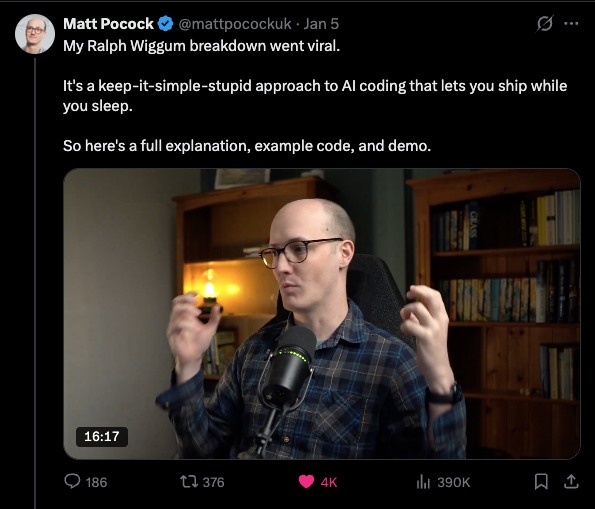
As TypeScript guru Matt Pocock suggests, structure your tasks like user stories:
- User Story
- Description
- Success criteria
- Passes (true/false)
Real-World Example: Building a Game Autonomously
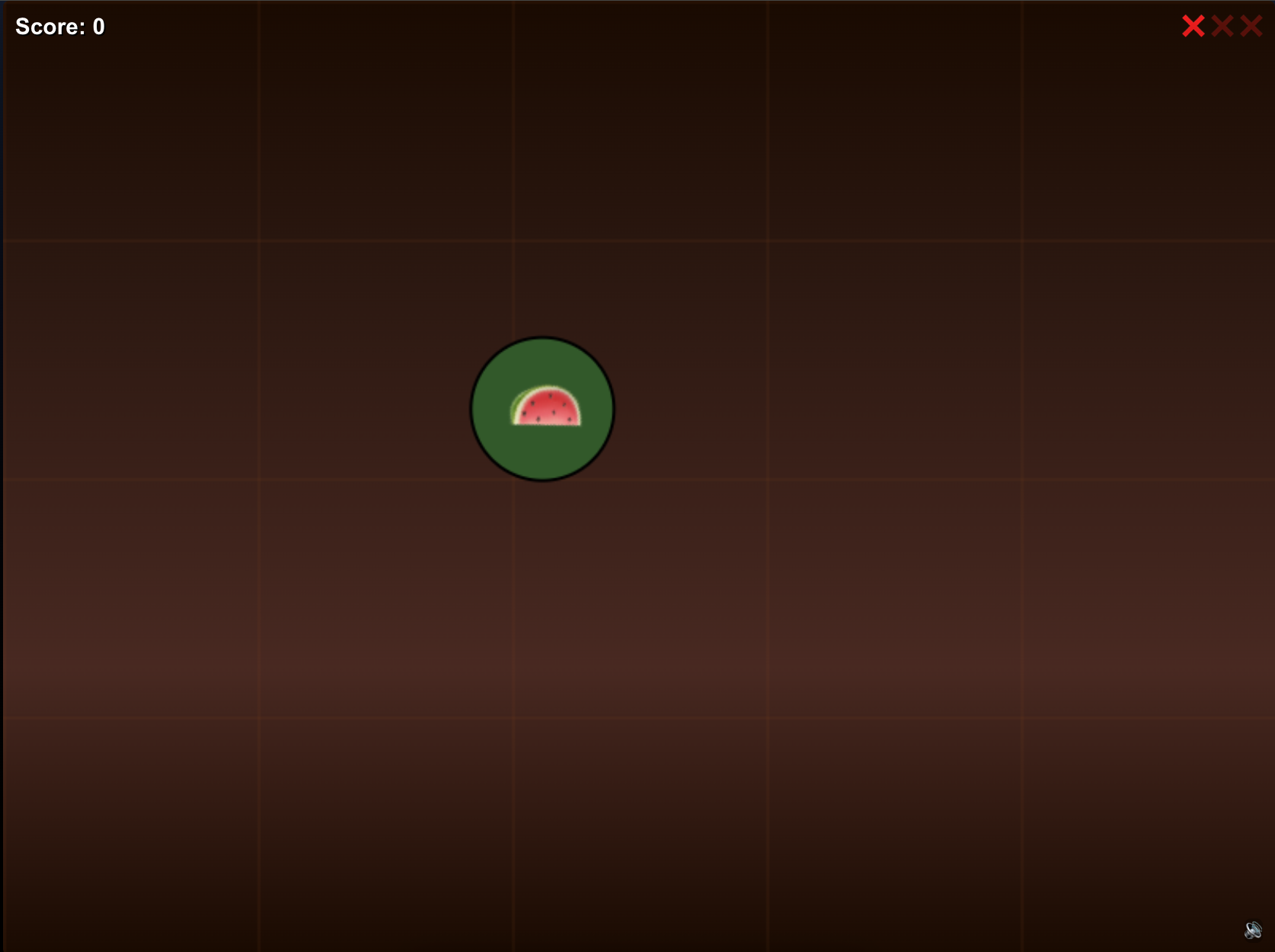
I recently gave my Cursor CLI agent access to the Replica MCP server and let Ralph loose on building a Fruit Ninja clone. The task file was comprehensive but clear, with specific success criteria around game mechanics, scoring, and UI interactions.
The result after ~1 hour with zero guidance: A fully functional Fruit Ninja clone
The agent went through 8 context rotations, learned from several failed attempts at canvas rendering (documented in guardrails), and ultimately delivered a polished game with proper collision detection, scoring, and even sound effects.
The Cost of Persistence
Since Ralph can run for extended periods, it's capped at 20 iterations by default. The technique works best with Cursor's Ultra or Max plans (starting at $200/month) due to the token consumption. But here's the thing: you're trading compute cost for developer time — and the math often works out favorably.
One hour of autonomous development at full speed vs. a day of human back-and-forth? For many tasks, Ralph wins.
Is This Just Hype?
The Ralph Wiggum Loop represents a philosophical shift in how we work with AI coding agents. Instead of trying to maintain perfect context and carefully curate what the LLM "remembers," we embrace fresh starts and let git be the memory layer.
It's not suitable for every task — anything requiring deep understanding of a large codebase or nuanced judgment calls still needs human guidance. But for well-defined, test-driven development tasks, Ralph's naive persistence might just be the most sophisticated approach.
As we move through 2026, I suspect we'll see more techniques that leverage long-running, autonomous agents with smart context management. The question isn't whether Ralph has a place in our workflows — it's what other "deterministically bad" techniques we haven't discovered yet.
What do you think? Is the Ralph Wiggum Loop a flash in the pan, or are we witnessing the emergence of a new paradigm in AI-assisted development?
Resources: